
Can You Brew Coffee Pods Without a Machine? 4 Easy Methods
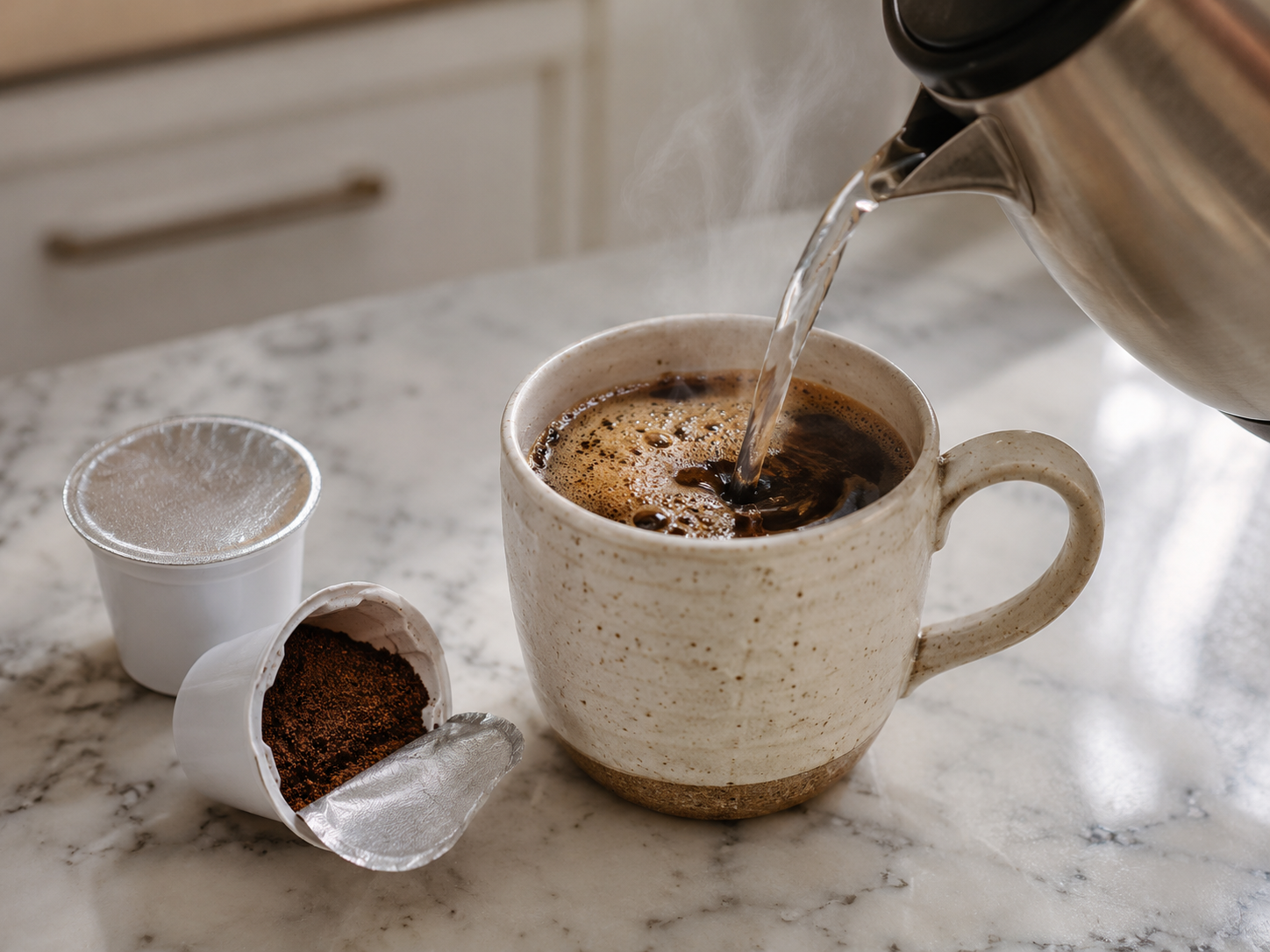
Can You Brew Coffee Pods Without a Machine? 4 Easy Methods
Yes, you can brew coffee pods without a machine. If a pod contains regular ground coffee, you can open it and brew the grounds using a paper filter, a French press, or just a mug of hot water. You can even make cold brew.
So if your Keurig has stopped working, you’re traveling without a coffee maker, or you’ve bought capsules for a machine you don’t own, the coffee doesn’t have to go to waste.
There’s one catch: the type of pod matters. A sealed K-Cup or Nespresso capsule won’t work like a tea bag. You’ll need to open it first. Soft paper pods and coffee bags, on the other hand, may be suitable for steeping directly in water.
Here’s how to tell the difference and make a decent cup with what you have.
Can You Really Brew Coffee Pods Without a Machine?
Most coffee pods contain ordinary roasted, ground coffee. The machine simply provides a controlled way to extract its flavor.
When hot water comes into contact with ground coffee, soluble compounds dissolve into the water, producing the drink we know as coffee. This process, called extraction, doesn’t require a capsule machine. It’s also what happens when you use a pour-over filter or French press.
The difference is control. Coffee machines regulate water flow, temperature, brewing time, and, in some systems, pressure. With manual brewing, you’ll need to manage these yourself.
You can still make an enjoyable cup. Just don’t expect it to taste exactly like coffee brewed in the machine the capsule was designed for.
First, Check What Kind of Coffee Pod You Have
The term “coffee pod” covers several products with different designs. Before opening or soaking anything, identify yours.
| Pod type | What’s inside | Best way to brew without a machine |
|---|---|---|
| K-Cup | Ground coffee, usually with an internal filter | Open the cup and brew the grounds separately |
| Nespresso Original | Ground coffee in a sealed capsule | Open the capsule and use the grounds |
| Nespresso Vertuo | Ground coffee in a sealed capsule | Open the capsule and use the grounds |
| E.S.E. pod | Compressed ground coffee enclosed in filter paper | Steep the pod or remove the grounds |
| Soft coffee pad | Ground coffee enclosed in porous paper | Steep in hot water |
| Coffee bag | Ground coffee in a bag intended for immersion | Brew much like a tea bag |
The key difference is whether water can reach the coffee. Paper pods allow water through their outer material, while sealed plastic and aluminum capsules prevent normal water contact.
K-Cups typically have an internal filter to keep grounds out of the drink. Once you’ve opened one, however, it’s usually easier to transfer the coffee into a separate filter than to reuse the plastic cup.
Also check the label. Some single-serve capsules contain instant coffee, hot chocolate, cappuccino powder, or other drink mixes rather than ground coffee. Those products may need a different preparation method.
Method 1: Brew Coffee Pods With a Paper Filter
Best for a clean cup with little sediment.
If you have a paper filter and a suitable holder, this is one of the easiest ways to use coffee from a K-Cup or another sealed capsule.
What you’ll need
- One or more coffee pods
- A paper coffee filter
- A pour-over dripper or another stable filter holder
- A mug
- Hot water
- Scissors, if needed to open the pod
How to do it
- Open the pod. Carefully peel back or cut through the lid and empty the coffee into the paper filter. Watch out for sharp edges on aluminum capsules.
- Set up the filter. Place it securely in a dripper or suitable holder over your mug.
- Heat the water. Aim for around 195–205°F (90–96°C).
- Wet the coffee. Pour in just enough water to saturate the grounds and wait 20–30 seconds.
- Continue pouring. Slowly add the remaining water in small circles, letting it drain through the coffee.
- Finish brewing. Once the water has drained, remove the filter.
As a starting point, use approximately 150–180 ml of water for every 10 grams of ground coffee. Adjust the amount depending on the strength you prefer.
Keep in mind that capsules vary considerably in size. A small espresso capsule may contain only about half that amount of coffee.
What will the coffee taste like?
Paper filters catch most suspended particles and some coffee oils, producing a relatively clean cup.
One possible problem is grind size. Espresso capsules often contain finer coffee than you’d normally use for pour-over brewing. Fine grounds can slow drainage and sometimes produce a bitter or muddy-tasting result.
If the filter takes unusually long to drain, try pouring more gently. If that doesn’t help, brewing the grounds directly in a mug or French press may be easier.
Method 2: Brew Coffee Pods Directly in a Mug
Best when you have no brewing equipment.
All you really need is a mug, hot water, and coffee grounds. It’s a practical solution for traveling, camping, or dealing with a broken coffee machine.
The process is similar to immersion brewing: the coffee sits in water for several minutes before you separate the liquid from the grounds.
What you’ll need
- A pod containing ground coffee
- A heatproof mug
- Hot water
- A spoon
- A fine-mesh strainer or coffee filter, if available
How to do it
- Open the capsule and empty the ground coffee into your mug.
- Add hot water at approximately 195–205°F (90–96°C).
- Stir gently to wet all the grounds.
- Let the coffee steep for about 3–4 minutes.
- Wait another minute for some of the grounds to settle.
- If you have a strainer, pour the coffee through it into a second mug.
No strainer? You can drink straight from the mug. Just leave the sediment at the bottom and avoid stirring it up.
How much water should you add?
For a K-Cup containing enough ground coffee, approximately 6–8 fl oz (180–240 ml) can be a reasonable starting point.
A small Nespresso espresso capsule containing only 5–6 grams of coffee will make a much weaker drink at that volume. Start with less water, or combine the contents of two or more capsules if you want a larger cup.
What will it taste like?
Because the grounds stay in contact with the water, mug-brewed coffee can have a fuller body than paper-filtered coffee. The trade-off is sediment, especially when the capsule contains finely ground coffee.
The grounds left in the cup may remind you of Turkish coffee, but the preparation isn’t the same. Traditional Turkish coffee uses an extremely fine grind and a different brewing process.
Method 3: Use a French Press
Best for a fuller-bodied cup or brewing several pods at once.
If you already own a French press, you can use coffee from capsules much as you would regular ground coffee.
The main thing to watch is grind size. French presses generally work best with medium-coarse to coarse grounds. Coffee from espresso capsules may be fine enough to pass through the metal filter, leaving more sediment in your cup.
How to do it
- Open enough capsules to collect approximately 15 grams of ground coffee.
- Add the grounds to your French press.
- Pour in around 225–250 ml of hot water.
- Stir gently to wet the coffee.
- Let it brew for approximately four minutes.
- Slowly lower the plunger without forcing it.
- Pour the coffee into your mug.
If the plunger becomes unusually difficult to push, stop. Very fine grounds can interfere with the filter, and forcing it isn’t necessary.
Tips for better results
- Too bitter? Try a slightly shorter brewing time.
- Too much sediment? Pour the finished coffee through a paper filter.
- Using finely ground espresso coffee? Expect more particles in the cup than you would with coarse French press grounds.
- Finished brewing? Pour the coffee out promptly rather than leaving it sitting on the grounds.
A French press also makes it easier to combine several small capsules when one doesn’t contain enough coffee for the serving you want.
Method 4: Make Cold Brew From Coffee Pods
Best for making coffee ahead of time or serving over ice.
Cold brew works without hot water. Instead, ground coffee stays in contact with cool water for several hours, gradually releasing flavor.
It’s an easy way to use spare capsules, particularly if you prefer cold coffee and don’t need your drink immediately.
What you’ll need
- Enough coffee pods to provide approximately 20 grams of ground coffee
- 300–350 ml of cold filtered water
- A clean jar or container with a lid
- A coffee filter or fine-mesh strainer
How to do it
- Open the pods and empty the grounds into the jar.
- Add the cold water and stir gently.
- Cover the container.
- Refrigerate for 12–18 hours.
- Strain thoroughly to remove the coffee grounds.
- Serve over ice.
You can adjust the coffee-to-water ratio depending on whether you want coffee that’s ready to drink or a stronger concentrate that you’ll dilute later.
How many pods do you need?
Some cold brew recipes suggest two or three pods for approximately 1½ cups (355 ml) of water. That can work, but counting capsules isn’t a reliable way to measure coffee.
Three small capsules containing 5 grams each give you 15 grams of ground coffee. Three larger pods containing 10 grams each give you 30 grams. The resulting drinks will have very different strengths if you use the same amount of water.
For more consistent results, check the net weight on the packaging or weigh the grounds.
Does cold brew taste different?
Yes. Cold extraction produces a different balance of flavors from hot brewing. Many people find cold brew smoother, with less sharp acidity.
That doesn’t necessarily mean it contains less acid in every measurable sense. The coffee’s chemical composition depends on the beans, water, brewing ratio, and extraction conditions.
Can You Use a Coffee Pod Like a Tea Bag?
Sometimes. It depends on the material surrounding the coffee.
Soft paper pods and coffee bags are the best candidates because water can pass through their outer layers. Some are designed specifically for immersion, while others are intended for use in coffee machines.
E.S.E. (Easy Serving Espresso) pods are a useful example. They typically contain around 7 grams of compressed ground coffee enclosed between layers of filter paper.
Although they’re designed for espresso preparation, the paper is permeable, so you can try steeping one directly in a mug.
How to steep a paper coffee pod
- Remove any outer packaging and place the paper pod in a heatproof mug.
- Add approximately 100–120 ml of hot water.
- Let it steep for 4–5 minutes.
- Gently move the pod once or twice to improve contact with the water.
- Remove the pod and taste the coffee.
If the coffee is too strong, add a little water. If it’s weak, try a longer steeping time or less water next time.
Because E.S.E. coffee is compressed, water may not penetrate it as thoroughly as loose grounds. Opening the pod and brewing its contents separately may give you more predictable results.
Don’t try this with an intact plastic K-Cup or sealed Nespresso capsule. Their packaging prevents water from reaching the coffee properly, so dropping one into boiling water won’t brew it like a tea bag.
Can You Brew K-Cups Without a Keurig?
Yes. If a K-Cup contains regular ground coffee, you can open it and use the grounds in a paper filter, French press, or mug.
What matters most is the amount of coffee inside. Different K-Cup products contain different quantities of grounds and are designed for particular serving sizes.
Too much water can leave your coffee tasting thin. Start with a smaller amount, taste it, and add more water if necessary.
Remember to check whether your K-Cup contains ground coffee or a soluble drink mix. The latter may require different preparation.
Can You Use Nespresso Capsules Without a Machine?
Yes, but you’ll need to open the capsules and brew the coffee separately.
Nespresso Original capsules commonly contain around 5–6 grams of ground coffee, although the amount varies by product. Vertuo capsules contain different quantities depending on the intended beverage size.
For a small Original espresso capsule, try the following:
- Carefully open the capsule.
- Empty the ground coffee into a mug or suitable brewing container.
- Add approximately 75–100 ml of hot water.
- Allow the coffee to steep for several minutes.
- Strain out the grounds before drinking, if possible.
Adjust the amount of water to your taste. If you want a large, strong mug of coffee, one small Original capsule probably won’t be enough. You may need two or more.
Can you make espresso without a Nespresso machine?
Not true machine-brewed espresso using these manual methods.
Espresso relies on forcing hot water through a compact bed of finely ground coffee under pressure. Steeping those same grounds in a mug or pouring water through a paper filter doesn’t reproduce those conditions.
You can use less water to make a concentrated coffee drink, but the texture, flavor, and body will differ from espresso made in a machine.
That doesn’t mean the coffee is unsuitable for manual brewing. It simply produces a different kind of drink.
How Much Water Should You Use for Coffee Pods?
The amount of ground coffee is a better guide than the number of capsules.
Conventional filter coffee often uses approximately 55–60 grams of ground coffee per liter of water, or roughly one part coffee to 17–18 parts water.
You can use that as a starting point for manually brewing opened pods.
| Amount of ground coffee | Suggested water volume |
|---|---|
| 5 g | 75–90 ml |
| 7 g | 105–125 ml |
| 10 g | 150–180 ml |
| 15 g | 225–270 ml |
| 20 g | 300–360 ml |
These are approximate starting ratios, not official settings for capsule machines. Some coffees taste better with more water, while others benefit from a stronger ratio.
For example, two capsules containing 5 grams each provide the same total amount of coffee as one pod containing 10 grams. That’s why checking the weight is more useful than simply counting pods.
Will Coffee From an Opened Pod Taste the Same?
Probably not. Coffee capsules are designed to work with particular brewing systems, and changing the method also changes how the coffee is extracted.
Several factors influence the result:
- Pressure: Espresso machines force hot water through compacted grounds under pressure. Mug brewing and French presses rely mainly on immersion.
- Grind size: Espresso capsules often contain finely ground coffee that behaves differently from coffee ground for a French press or pour-over.
- Brewing time: A capsule machine may complete extraction in seconds, while manual immersion takes several minutes.
- Filtration: Paper filters catch more suspended particles and some oils. Metal filters let more oils and fine sediment pass into the drink.
- Coffee-to-water ratio: Too much water can make the coffee weak; too little can leave it overly concentrated.
Freshness matters, too. Sealed capsules help protect ground coffee from oxygen and moisture. Once you open one, that protection is lost, so it’s best to use the grounds promptly.
The beans and roast also play a role. A dark-roasted capsule won’t automatically produce mild coffee just because you switch to another brewing method.
Common Problems When Brewing Coffee Pods Manually
If your first attempt doesn’t taste quite right, the problem is often easy to identify.
| Problem | Possible cause | What to try |
|---|---|---|
| Coffee tastes weak | Too much water for the amount of coffee | Use less water or more coffee |
| Coffee tastes bitter | Excessive extraction | Shorten the steeping time or adjust the ratio |
| Coffee tastes sour or thin | Insufficient extraction | Try slightly hotter water or a longer brew |
| Too much sediment | Fine grounds are passing through the filter | Use a paper filter |
| Pour-over drains too slowly | The coffee may be ground too finely | Pour more gently or switch to immersion brewing |
| Coffee tastes stale | The grounds may have lost freshness | Use a freshly opened pod |
Change one thing at a time, such as the water temperature, brewing time, or amount of coffee. That way, you’ll know what actually improved the result.
Frequently Asked Questions
Can I put a K-Cup directly into boiling water?
No. An intact K-Cup isn’t designed to work like a tea bag. Its packaging prevents water from flowing properly through the grounds. Open the pod and brew the coffee separately instead.
Can you make coffee from a pod without a filter?
Yes. Empty the coffee grounds into a mug, add hot water, and let them steep for about 3–4 minutes. Give the grounds another minute to settle, then drink carefully without disturbing the sediment.
Can you use coffee pods in a regular coffee maker?
Yes, if they contain ordinary ground coffee. Open the pods, transfer the grounds into the coffee maker’s appropriate filter basket, and use enough coffee for the amount of water you’re brewing.
Can coffee pods be used in a French press?
Yes. Empty the grounds into the press and brew them as you would regular coffee. Fine espresso capsule grounds may leave more sediment than coarser coffee intended for a French press.
How many coffee pods do I need for one cup?
It depends on the serving size and the amount of coffee in each pod. A capsule containing 5 grams of ground coffee will generally make a smaller manually brewed serving than one containing 10–12 grams. For a larger or stronger cup, you may need multiple capsules.
Can you make iced coffee with pods without a machine?
Yes. Brew the grounds with hot water, let the coffee cool, and pour it over ice. You can also prepare cold brew by steeping the grounds in cold water in the refrigerator for 12–18 hours.
Can you reuse a coffee pod after brewing?
Technically, yes, but the second brew will usually be much weaker. Most of the readily extractable flavor has already been removed during the first brewing cycle.
What’s the easiest way to brew coffee pods without a machine?
For sealed capsules, simply open the pod, empty the grounds into a mug, add hot water, and steep for about four minutes. Strain the coffee if you can, or let the grounds settle.
If you have a soft coffee bag specifically designed for immersion, you can usually brew it directly in hot water without opening it.
Final Thoughts
You don’t need a capsule machine to use the coffee inside a pod. As long as it contains regular ground coffee, you can brew it much like coffee from an ordinary bag.
Use a paper filter for a cleaner cup, a French press for a fuller-bodied drink, or a mug when you have no equipment. Cold brew is another option if you have time to prepare it in advance.
Start by identifying the pod, checking how much coffee it contains, and choosing a suitable amount of water. The result may not taste exactly like machine-brewed coffee, but you can still make a good cup from those unused capsules.
Sources and Further Reading
- Coffee Stack Exchange — Can Coffee Pods Be Brewed in a Cup?
- Blackout Coffee — How to Use Coffee Pods Without a Machine
- Specialty Coffee Association — Water and Coffee Acidity
- Nespresso — Frequently Asked Questions
- Illy — E.S.E. Espresso Pod Preparation Guide
FAQs
Can I brew coffee pods in a cup?Yes, but the method depends on the type of pod. If you have a sealed K-Cup or Nespresso capsule, open it and empty the coffee grounds into your cup. Add hot water, let the coffee steep for 3–4 minutes, then strain it or allow the grounds to settle. Soft paper coffee pods designed for immersion can be steeped directly in hot water.
Can coffee pods be used without a coffeemaker?
Absolutely. Coffee pods containing regular ground coffee can be brewed without a machine. You can use a French press, a pour-over filter, or simply a mug of hot water. Cold brewing is another option. The flavor may differ from machine-brewed coffee, but the grounds are perfectly suitable for manual brewing.
How do I use Keurig coffee pods without a coffeemaker?
Carefully remove the foil lid from the K-Cup and empty the coffee grounds into a paper filter, French press, or mug. Add hot water at approximately 195–205°F (90–96°C). If brewing directly in a mug, let the coffee steep for about four minutes before straining or allowing the grounds to settle. Don’t steep the unopened K-Cup itself.
Can I open Keurig pods and use them in a regular coffeemaker?
Yes. You can open a K-Cup and transfer its ground coffee into the filter basket of a regular drip coffee maker. The grounds work much like ordinary pre-ground coffee, although their grind size may affect extraction. Make sure you use enough coffee for the amount of water you’re brewing, as a single K-Cup may not be sufficient for a full pot.
Can I reuse coffee pods?
It depends on the pod. Disposable coffee pods are intended for a single brew, and using the same grounds again usually produces weak, watery coffee. Refillable pods, however, are designed for repeated use with fresh grounds. You can clean and refill them according to the manufacturer’s instructions, provided they remain in good condition.
How many times can I use a pod?
A disposable coffee pod is intended for one brewing cycle. Although you can try brewing the same grounds again, most of their readily extractable flavor will already be gone. Reusable pods can be used many times with fresh coffee grounds. Their lifespan depends on the pod’s material, construction, and care instructions.
How do I use reusable pods?
Open the reusable pod and fill it with fresh ground coffee, staying within the manufacturer’s recommended fill level. Close the lid securely, place the pod in a compatible coffee machine, and brew as usual. Afterward, empty the used grounds, wash the pod, and let it dry before refilling. Always check compatibility and follow the manufacturer’s instructions, as reusable pod designs vary.