
How to Make Iced Coffee Taste Better at Home
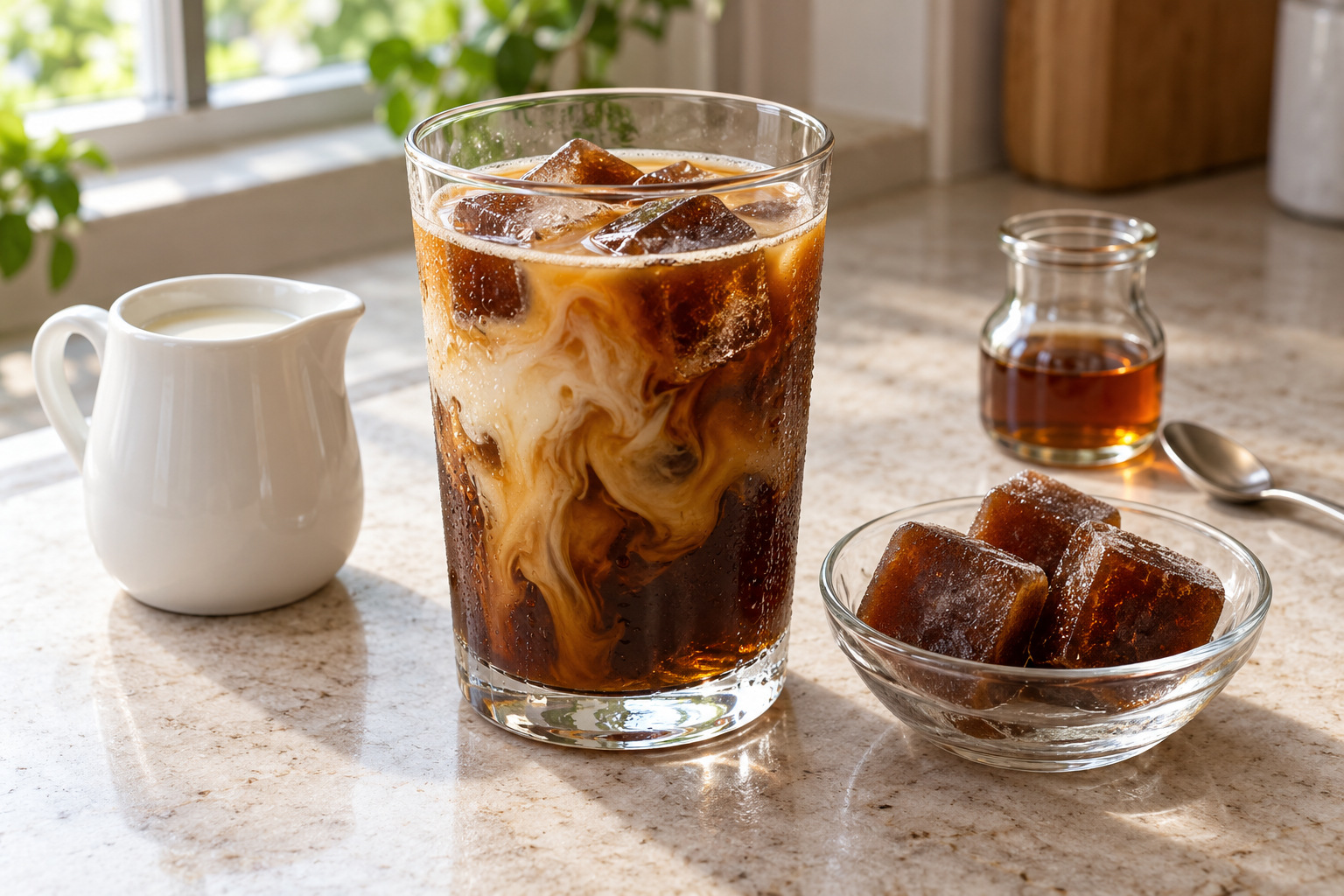
To make iced coffee taste better, measure the ice as part of the recipe, start with fresh coffee, and adjust the brew before adding milk or syrup. If it tastes watery, check dilution first. If it tastes sour, bitter, or harsh, look at extraction and the beans themselves. Adding more coffee is not the answer to every disappointing glass.
A useful starting point is flash brewing: hot coffee drips directly onto a measured amount of ice, so cooling and dilution happen together. You get a fresh iced drink without waiting overnight or discovering halfway through it that most of the flavor has disappeared.
Start with a measured iced coffee recipe
Ice changes the recipe as it melts. Add 50 g of melted ice to 250 g of brewed coffee, and the drink becomes 300 g in total. Its coffee concentration drops to about 83% of the original—a reduction of roughly 17%, assuming nothing else changes.
That is why pouring an ordinary serving of coffee over an unmeasured pile of ice can produce a weak drink. Flash brewing solves this by replacing part of the brewing water with ice.
A flash-brew recipe to start with
This recipe comes from Counter Culture Coffee’s flash-brew guide. You will need a pour-over brewer, a filter, a scale, and a suitable heat-resistant server.
Use 30 g of coffee, 335 g of hot water, and 165 g of ice. Heat the water to about 200°F (93°C) and use a medium-fine grind.
- Rinse the paper filter with hot water, then discard that rinse water.
- Put 165 g of ice in the server and place the brewer above it.
- Add the 30 g of ground coffee to the filter.
- Wet the grounds with the first 30 g of brewing water and wait about 30 seconds.
- Continue pouring gradually over the grounds until you have used 335 g of water in total, including the initial pour.
- Let the coffee drain onto the ice, remove the brewer, and stir before tasting.
The hot water and initial ice total 500 g, a coffee-to-water ratio of about 1:16.7. The grounds retain some water, so the finished drink weighs less.
Serve over fresh ice as needed. Keep that serving amount consistent when comparing batches, or use matching-strength coffee cubes to limit further dilution.
Choose beans for the flavor you want
Start with coffee you enjoy, rather than assuming that anything destined for ice needs a dark roast. If your iced coffee tastes smoky or burnt, a lighter roast may be a more useful change than another spoonful of sugar.
A 2024 study of full-immersion coffee found that roast level was the largest driver of flavor differences within its sample set, ahead of brewing temperature and time. Darker roasts were associated with more bitter, smoky, roasted, and burnt characteristics. That does not make dark roast bad; it makes roast choice relevant.
For a brighter black iced coffee, try a lighter roast with flash brewing. For a milk-based drink, coffee with chocolate or nutty tasting notes is another useful starting point. Treat these as options to compare, rather than rules about which beans belong in which glass.
Buy manageable quantities, protect the beans from air, moisture, heat, and light, and grind the portion you need just before brewing. Cooling does not restore aroma to stale coffee.
Adjust extraction before making everything stronger
Strength is concentration; extraction is how much you dissolve from the grounds. You can make a concentrated coffee that still tastes poorly extracted. Increasing the dose while keeping the water unchanged alters both the concentration and the brewing conditions.
Sharp sourness, little sweetness, and a short finish can suggest insufficient extraction. Bitter, drying flavors can suggest excessive or uneven extraction. These are clues, not a diagnosis: roast, water, and concentration also influence what you taste.
For flash brew, try your usual pour-over grind or a slightly finer setting. Less hot water passes through the grounds than in an equivalent hot recipe, so check that the coffee is extracting well. A burr grinder helps make adjustments more consistent.
If the drink is sour and thin, test a slightly finer grind or longer contact time. If it is bitter and drying, check the roast and cleanliness first, then consider a coarser grind or shorter contact time. Change one variable at a time.
If the coffee tastes balanced but overwhelmingly intense, try a little cold water before changing the entire brewing method. Greater concentration does not automatically mean greater sweetness or better flavor.
Try cold brew if you prefer a different flavor profile
Cold brew is extracted with cool water over a longer period. Iced coffee can instead be brewed hot and chilled. Neither method automatically produces the better drink.
In controlled research summarized by the Specialty Coffee Association and UC Davis, cold-brewed samples tasted somewhat less bitter, sour, and rubbery, and more floral, than hot-brewed samples served cold at comparable strength. The differences also depended on roast and origin.
Cold brew is therefore worth trying if you prefer that profile, but it is not guaranteed to be sweeter or free of acidity. Perceived sourness, pH, and total acidity are different measurements.
Follow a complete recipe, including its dilution instructions. Toddy’s home-system instructions give an 8–24-hour steeping range and suggest starting with one part of its concentrate to two parts water or milk. Another concentrate may need a different ratio; ready-to-drink cold brew may need none.
Longer steeping does not necessarily improve balance. Before extending the brew time, check whether the concentrate simply needs more or less dilution.
Use good-tasting water—and pay attention to the ice
Water’s mineral composition can affect extraction, acidity, and body. “Filtered” is not a complete description of water, and it does not guarantee the best result for every coffee.
A simple comparison is more useful than guessing: brew the same beans with your usual drinking water and another pleasant-tasting drinking water, keeping the recipe unchanged.
Use suitable water for the ice, too. Wash the trays regularly and keep stored cubes protected from odors. Freezer aroma is rarely one of the tasting notes on the bag.
Large cubes still dilute coffee when they melt. For a predictable drink, measure the ice and account for how warm the coffee is when it meets it, rather than relying on cube size alone.
When coffee ice cubes help
Coffee cubes melt into brewed coffee instead of plain water. If the cubes and the liquid coffee have the same concentration, the concentration stays consistent as they melt.
Weaker cubes can dilute a stronger brew; concentrate cubes can strengthen it. In a latte, melting coffee cubes gradually change the coffee-to-milk ratio. Make them from coffee that tastes good and store them sealed.
They also contain caffeine from the original brew. Add them to another serving of coffee and drink the whole thing, and their caffeine becomes part of the total.
Change the filter if the texture bothers you
As the National Coffee Association’s pour-over guide explains, paper filters retain more oils, while metal filters allow more oils and sediment into the cup.
If your iced coffee feels gritty or your cold brew contains fine particles, try additional paper filtration. It can produce a cleaner, lighter texture, though you may lose some of the heavier body you enjoy.
Rinse a paper filter before brewing if it contributes a papery taste. Discard the rinse water separately, especially when you have already weighed the ice for a flash-brew recipe.
Add milk and sweetness gradually
If your iced latte tastes mostly of milk, reduce the milk before automatically doubling the coffee dose. You may need a more concentrated coffee base, but it should still taste balanced.
When comparing dairy or plant-based drinks, keep the coffee, ice, and milk quantities consistent. Different products have different flavors and textures; changing three ingredients at once makes it harder to identify what helped.
For sweetness, dissolve granulated sugar in the warm coffee before adding ice, or use a prepared syrup in an already-cold drink. Starbucks recommends combining syrups and sauces thoroughly with the coffee, using warmth where helpful before cooling. Many liquid syrups also mix readily into cold coffee.
Vanilla, caramel, chocolate, hazelnut, or mint can change the flavor, but start with a small amount and taste again. Syrup usually adds sugar as well as aroma, so check the label if that matters to your recipe.
Cinnamon, nutmeg, and cocoa offer other options. Use them sparingly: too much powder can overpower the coffee and leave a grainy texture. A strained flavored syrup can be easier to distribute evenly. Cinnamon has many uses; repairing a badly brewed coffee is asking rather a lot of it.
Should you add a pinch of salt?
Sodium salts can suppress perceived bitterness in taste-mixture research, but those studies do not establish a universal salt dose for iced coffee. The effect depends on the bitter compounds and the amount of salt.
If you want to experiment, test a very small amount in a separate portion. Salt changes perception; it does not remove caffeine or restore stale flavors. Check the beans, extraction, and dilution before seasoning the whole batch.
Fix the problem you can actually taste
Taste the finished drink cold, at roughly the temperature you plan to enjoy it. Serving temperature changes sensory perception, so a recipe that seems balanced hot may need adjustment when chilled.
| What tastes wrong | Check first | What to try |
|---|---|---|
| Watery or weak | Melted ice, added water, and milk | Measure dilution; reduce added liquid or use matching-strength coffee cubes. |
| Too intense or heavy | Whether the base is a concentrate | Add a little cold water and taste again. |
| Sharply sour with little sweetness | Extraction and the beans’ natural profile | For filter brewing, test a slightly finer grind or longer contact time. |
| Bitter and drying | Roast, uneven extraction, and dirty equipment | Try a less dark roast; where appropriate, test a coarser grind or shorter brew. |
| Gritty or muddy | Fine particles and filtration | Try a suitable paper filter. |
| Odd freezer flavor | The ice itself and its storage | Make fresh ice with pleasant-tasting water and store it covered. |
| Coffee disappears behind milk or syrup | The quantity of additions | Reduce additions first, then adjust the coffee base if necessary. |
Use the table as a starting point, not proof that one flavor always has one cause. Record the coffee dose, hot water, ice, and additions, then change a single variable for the next brew.
Clean the equipment and refrigerate batches
Old coffee oils and residue in baskets, filters, and carafes can affect the next batch. Clean the equipment according to its instructions before blaming the beans. Good syrup is an expensive way to hide a dirty coffee pot.
For batches, use a clean, covered container and refrigerate the coffee promptly. Add milk, cream, and other perishable ingredients to individual servings when practical. There is no single storage period that guarantees unchanged flavor for every homemade iced coffee.
Keep the refrigerator at 40°F (4°C) or below. Drinks containing perishable additions should not sit unrefrigerated for more than two hours, or one hour above 90°F (32°C). Those limits concern perishable ingredients; they are not a universal two-hour expiration rule for plain black coffee.
Once you find a combination you like, write it down—including the ice. A repeatable recipe makes it much easier to keep a good iced coffee good all the way through the glass.
FAQs
What factors affect the taste of iced coffee?
The main factors are the beans, roast level, freshness, water, grind size, extraction, and final dilution from ice, water, or milk. Serving temperature also changes flavor perception. Start with a balanced coffee base before adjusting sweetness or adding flavorings.
How do I choose coffee beans for iced coffee?
Choose fresh beans with flavors you enjoy; you do not need a special “iced coffee” blend. Try lighter roasts for a brighter drink or coffee with chocolate and nutty notes for milk-based recipes. Control dilution through your recipe rather than relying on a darker roast.
What brewing methods work well for iced coffee?
Flash brew uses hot water and measured ice to produce coffee that is cooled during brewing. Cold brew uses cool water and a longer steep, producing either concentrate or ready-to-drink coffee depending on the recipe. You can also refrigerate freshly brewed coffee. None of these methods is automatically best for everyone.
How can I enhance the flavor of my iced coffee?
First adjust the coffee’s strength and balance. Then add small amounts of milk, syrup, vanilla, or spices to taste. Dissolve granulated sugar in warm coffee before chilling, or use syrup in a cold drink. Add cinnamon and cocoa sparingly to avoid overpowering the coffee or creating a gritty texture.
How can I improve the presentation of iced coffee?
Use a clean, chilled glass and a restrained garnish, such as mint or chocolate shavings. Pour milk slowly for visible layers, then stir before drinking for an even flavor. Large ice cubes still cause dilution; coffee cubes preserve concentration when made from coffee of the same strength as the drink.
How should I store and serve iced coffee?
Keep batches covered in a clean container in the refrigerator at 40°F (4°C) or below, and use promptly for the best flavor. A week is not a universal storage guarantee. Add milk or cream when serving. Drinks with perishable additions should not remain unrefrigerated beyond two hours, or one hour above 90°F (32°C).
How can I personalize iced coffee consistently?
Record the amounts of coffee, brewing water, ice, milk, and sweetener. Change one variable at a time and compare drinks at a similar serving temperature. This helps you identify whether an improvement came from the beans, extraction, dilution, or additions—and repeat the recipe you actually liked.
y whether an improvement came from the beans, extraction, dilution, or additions—and repeat the recipe you actually liked.