
Freezing Brewed Coffee: A Comprehensive Guide
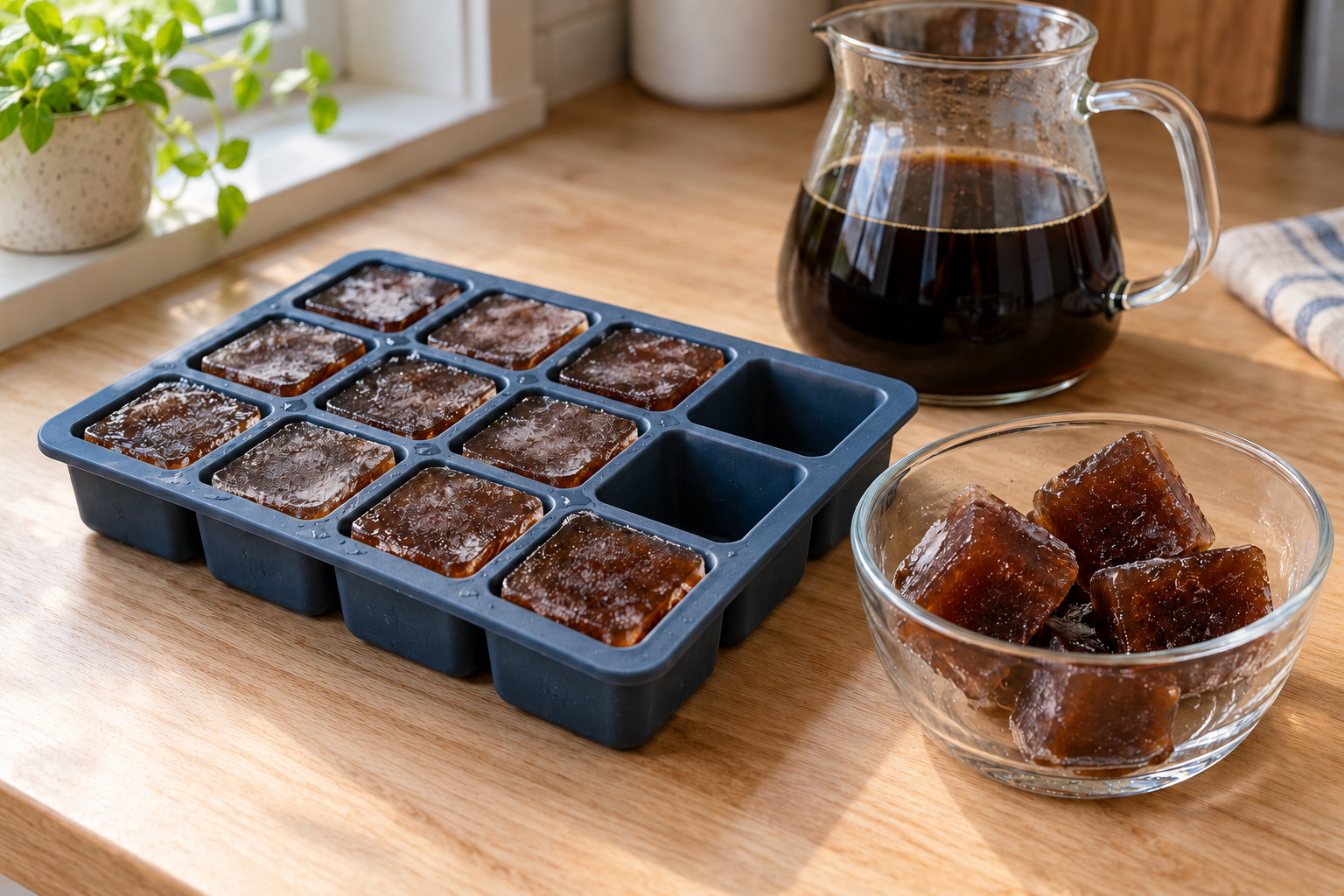
Yes, you can freeze brewed coffee. Freeze it in small portions or make coffee ice cubes, then store it tightly sealed at 0°F (−18°C) or colder. For homemade coffee cubes, aim to use them within about two weeks for the freshest flavor. That is a practical quality target, not a deadline after which the cubes suddenly become unsafe.
The biggest benefit is a better iced coffee: coffee cubes melt into more coffee instead of adding plain water. They also give you a useful home for a fresh leftover batch. Coffee that has spent the afternoon sulking on a hot plate, however, will not get a personality transplant in the freezer.
How long can you freeze brewed coffee?
The Coffee Bean & Tea Leaf recommends using coffee ice cubes within roughly two weeks; Weaver’s Coffee gives a similar recommendation for the freshest flavor. Treat that as a sensible rotation schedule for homemade cubes, especially if you make them regularly.
There is no well-established, universal freezer shelf life that guarantees great flavor for every homemade coffee, container, and brewing method. An airtight portion and an uncovered tray do not offer the same protection. The freshness of the original brew matters, too.
Safety is a separate question. Under USDA freezing guidance, food that was safe when frozen and stays continuously frozen at 0°F remains safe indefinitely, although quality can deteriorate. Freezing does not sterilize food or undo poor handling before storage. A badly handled milky coffee does not become a fresh start just because it gets solid.
| What you need to know | Practical guidance |
|---|---|
| Freezer temperature | 0°F (−18°C) or colder. |
| Best flavor target for homemade coffee cubes | About two weeks, stored in a sealed freezer bag or container. |
| Time to freeze a tray | Often around 3–4 hours; cube size and freezer temperature affect the time. Overnight is convenient. |
| Thawing a larger portion | Use the refrigerator. Allow more time for larger containers, then stir after it has thawed completely. |
How to freeze brewed coffee properly
Drip coffee, French press coffee, espresso, and prepared cold brew can all be frozen. Choose coffee you would still enjoy drinking, and remove the grounds before storing it. Freezing fresh leftovers is useful; freezing stale coffee mostly preserves your disappointment.
- Cool the coffee promptly. Divide a large batch into smaller containers and refrigerate it rather than leaving it on the counter for hours.
- Choose your portions. Use a clean ice cube tray for iced drinks or small freezer-safe containers for individual servings.
- Leave room for expansion. For liquid stored in a container, follow its instructions for headspace rather than filling it to the brim.
- Freeze until solid. A tray may take a few hours; larger portions need longer.
- Seal the cubes for storage. Once frozen, transfer them to a freezer bag or an airtight freezer-safe container. Press excess air out of a bag before closing it.
- Label the batch. Include the date and coffee type. If it is a concentrate, note the dilution ratio you normally use.
Keep portions small enough to use in one drink or recipe. That saves you from thawing an entire bottle whenever you want a glass of iced coffee.
Which containers work best?
Use packaging intended for freezing: freezer bags, freezer-safe plastic containers, or suitable glass containers. The National Center for Home Food Preservation’s packaging guidance emphasizes protection from moisture loss and unwanted odors, along with a reliable seal.
Check the container itself, not just the lid. An ordinary glass bottle is not automatically suitable for freezing liquids, and expanding coffee can break inappropriate glass. Use glass specifically designed for freezing and follow its filling instructions.
A tray is handy for making cubes, but a sealed bag or container is better for storing them. Uncovered cubes can shrink through sublimation, when ice changes directly into water vapor. They can also pick up freezer odors. Garlic-scented espresso is a surprisingly easy recipe to avoid.
Do coffee ice cubes really prevent watery iced coffee?
They do when the cubes and the liquid coffee have the same strength. Ordinary ice adds water as it melts. Coffee cubes add brewed coffee, so cubes made from the same brew preserve its concentration.
There is a small catch: weaker coffee cubes can dilute a stronger brew, while cubes made from concentrate can make it stronger. For a predictable result, freeze some of the same coffee you plan to serve, or account for the concentrate’s dilution ratio.
For an iced latte, pour cold milk over coffee cubes and stir as they melt. The drink becomes more coffee-forward as the cubes release their contents. If you want a balanced latte from the first sip, start with liquid coffee and milk, then add cubes to keep it cold.
Freezing hot-brewed coffee does not turn it into cold brew. Cold brew describes how the coffee was extracted, not how chilly it eventually becomes.
Does freezing change the caffeine content or strength?
Freezing is not a decaffeination method. Coffee cubes contain caffeine from the original brew. Add them to another serving of coffee and drink the whole thing, and that caffeine becomes part of your total.
For a simple hypothetical example, suppose a batch contains 120 mg of caffeine and you divide it into eight equal portions. Each cube contains about 15 mg; four cubes add about 60 mg when fully consumed. Those numbers illustrate the calculation, not a standard caffeine content for coffee cubes.
Melting does not create caffeine, and fully freezing and thawing a batch does not add coffee solids. Partial thawing is different: the first liquid to melt can have a different concentration from the ice left behind. Researchers use that principle to concentrate coffee extracts by separating liquid from remaining ice.
For an ordinary serving, let the whole portion thaw and stir it. That gives you a more even drink than pouring off the first dark puddle and assuming it represents the entire batch.
How to thaw and reheat frozen coffee
For liquid coffee, thaw the closed container in the refrigerator, kept at 40°F (4°C) or below. Small portions thaw sooner than a large bottle, so there is no useful one-size-fits-all thawing time. If you want coffee tomorrow, moving a small portion to the fridge tonight is a convenient starting point; check that it has thawed completely.
For iced drinks, skip thawing and put the cubes straight into the glass. For blended coffee drinks, use a blender designed to crush ice.
Once a liquid portion has thawed, stir it and reheat it in suitable stovetop or microwave cookware if you want hot coffee. Adding hot water to frozen regular-strength coffee will dilute it. Adding water to frozen concentrate may be exactly what the recipe requires, so keep that label useful.
USDA guidance allows food thawed safely in the refrigerator to be refrozen, though quality may suffer. For coffee, freezing single-use portions makes repeated thawing unnecessary. Thaw what you plan to use and use it promptly; another trip to the freezer will not improve the flavor.
Can you freeze coffee with milk, cream, or sugar?
Yes, but plain black coffee is usually the more flexible choice. Milk or cream can separate after freezing and thawing, and some plant-based drinks become grainy. Stirring may help, but you should not expect every frozen latte to return with its original texture.
Freeze the coffee on its own and add fresh milk or cream when you make the drink. That also lets you change the proportions without committing an entire batch to one recipe.
For drinks with perishable additions, follow the FDA’s food-storage guidance: do not leave them unrefrigerated for more than two hours, or more than one hour when the air temperature is above 90°F (32°C). Follow the label for plant-based products that require refrigeration, too. These limits concern perishable ingredients; they are not a universal two-hour expiration rule for plain black coffee.
Sweetened coffee can also be frozen. A high concentration of sugar can make mixtures softer or harder to freeze solid, so heavily sweetened coffee and concentrated syrups may behave differently from black coffee. Adding your syrup or sweetener when you serve the drink gives you more predictable portions.
What can you make with frozen coffee?
Coffee cubes are useful in iced coffee, iced lattes, blended coffee drinks, and milkshakes. You can also thaw measured portions for cakes, desserts, or sauces that call for brewed coffee. Count that coffee toward the recipe’s liquid, and use the strength the recipe expects.
If you want less caffeine, freeze coffee brewed from decaf beans in the first place. The freezer cannot do that job for you.
Keep the quality check sensible: weak aroma, shrunken cubes, or freezer odors mean the coffee may no longer taste good. Smell alone cannot prove a drink is safe, especially if it contains milk and was stored improperly. Freeze a fresh batch, seal it well, and keep portions small enough that you actually use them.
FAQs
Can I freeze brewed coffee?
Yes. Fresh, properly handled brewed coffee can be frozen in small portions or as coffee ice cubes. Keep it sealed at 0°F (−18°C) or colder.
What is the best way to freeze brewed coffee?
Cool the coffee promptly, dividing large batches into smaller containers for refrigeration. Pour it into clean ice cube trays or freezer-safe containers, leaving room for expansion. Once the cubes are solid, transfer them to a sealed freezer bag or container.
How long can I store frozen brewed coffee?
For homemade coffee ice cubes, aim for about two weeks for the freshest flavor. This is a quality recommendation, not a safety deadline. Properly handled coffee kept continuously frozen at 0°F (−18°C) can remain safe much longer, although flavor may deteriorate. There is no universal two-month guarantee of unchanged quality.
Can I freeze coffee with milk or cream?
Yes, but milk or cream may separate after thawing, changing the texture. For better results, freeze black coffee and add fresh dairy when serving. Freezing will not make a milky coffee safe if it was already stored improperly.
Can I freeze cold brew coffee?
Yes. Freeze prepared cold brew in cubes or sealed, freezer-safe portions. If you freeze concentrate, label its usual dilution ratio so you can prepare it correctly later.
What are some ways to use frozen brewed coffee?
Add coffee cubes to iced coffee, blend them into frozen drinks, or thaw measured portions for baking and desserts. You can also reheat thawed coffee. Add water when the coffee is a concentrate; regular-strength coffee will simply become weaker.
How do I thaw frozen brewed coffee?
Thaw it in a closed container in the refrigerator at 40°F (4°C) or below, then stir. Small portions may thaw overnight; larger ones take longer. Coffee cubes can go directly into iced drinks. Avoid countertop thawing, especially for coffee containing milk or cream.
What are some tips for freezing brewed coffee?
Start with coffee that still tastes good, freeze single-use portions, and label the date. Store cubes airtight to limit moisture loss and freezer odors. Use freezer-safe packaging, leave headspace for liquids, and avoid repeated thawing and refreezing for better flavor.
Are there any risks associated with freezing brewed coffee?
Freezing properly handled coffee is generally safe, but it does not sterilize the drink. Coffee with perishable milk or cream should not sit unrefrigerated for more than two hours, or one hour above 90°F (32°C). Flavor loss and freezer odors are separate quality issues.
Where can I find more information on freezing brewed coffee?
See The Coffee Bean & Tea Leaf’s coffee cube guide for practical preparation tips, USDA’s freezing guidance for food safety, and FDA’s storage advice for temperatures and handling perishable ingredients.